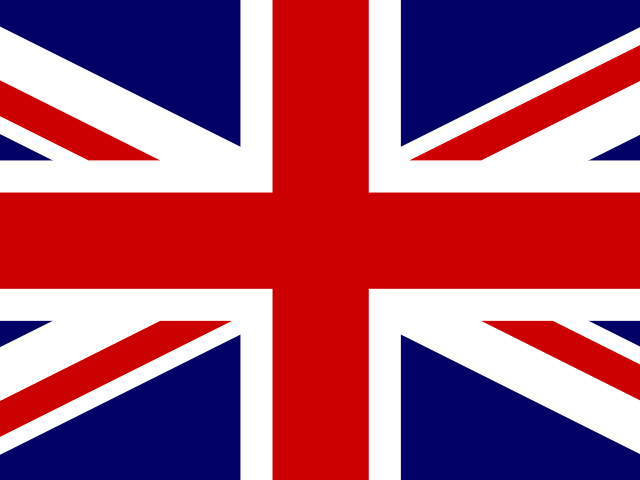
Great Britain has spent centuries reimagining itself as something much larger than its geographical self. An empire. A more civilised civilisation. A standard-bearer, imposing its norms on others. So, it’s no surprise that the story of how Britain lost its connection to its surrounding waters and the food in it – besides the reigning Cod – isn’t just a culinary story. It’s a colonial one.
In the 17th and 18th centuries, as the British empire reached its most brutal in the colonies, a rigid class system was developing at home. This system of class designated some seafood ‘noble’ and the rest, less so. Oily, nutritious, abundant mackerel and sardines were strictly for the poor and colonised and eating fish with bones or skin deemed undignified – it required too much work, and work was the yolk of the ‘Other’.
This colonial mindset persists, with similar boats that went out in search of people and spices now swallowing up a food source they no longer know what to do with. A whole sensory world of taste, touch, communion, and connection with the seas absent. In Britain the forgetting has encouraged the over consumption of one type of fish and eroded the connection to the abundance of the seas that surround the island, even though, as of January 2026, an estimated 12% of UK households, representing roughly 6.3 million adults, experienced food insecurity according to data from The Food Foundation.